The Empathy Gap: Cultural Inequity with Alison Koslowski & Rama Gheerawo
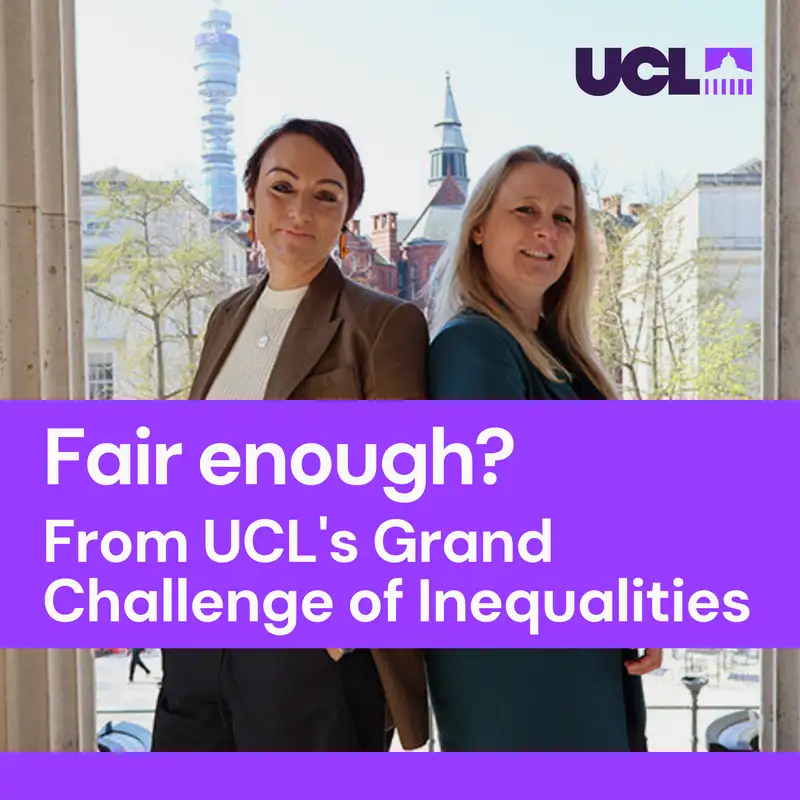
Lauren Andres: Hello and welcome to Fair Enough, the new podcast from UCL Grand Challenge of Inequalities. It explores existing and emerging innovative solutions for delivering everyday justice. I'm Lauren Andros.
Victoria Austin: And I'm Victoria Austin. In this series, we'll bring together visionary leaders from across disciplines and sectors to ask one simple question. When it comes to tackling inequalities, are we doing enough?
Lauren Andres: So whether you work in industry, government policy or research, or you simply care about what a fairer future could look like, this podcast is for you. Let's get started. In today's episode, we're going to be exploring cultural inequity and what we can do about it.
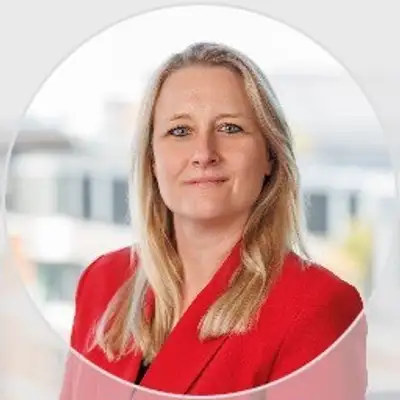
Victoria Austin: Today we're joined by two brilliant guests. Alison Kozlowski is Pro Provost, Equality and Inclusion, Co Director of the Thomas Coram Research Unit and Professor of Social Policy at University Golledge London. She's currently working on a new book, how to provide Strategic Leadership for Equality, Diversity and Inclusion in your organisation, Lifting Barriers, which draws on her experience in senior university leadership. First and foremost, though, she's an academic with a track record of leading international research, collaboration on parenting leave policies and advising on their implementation within organisations. Her most recent book project, Caring for the Parental Leave and Pathways to Sustainability, is forthcoming with UTL Press next year. Rama Gheerawo is a global authority on design for all, accessibility and creative leadership, having worked with organisations in more than 40 countries. He is the author of Creative how to design the 21st century organisation. Now a bestseller, it's rapidly redefining leadership
Lauren Andres: for a new era.
Victoria Austin: Rama is the founder of Instil and president of Eidd Design for All Europe. Formerly director of the Helen Hamlin Centre for Design at the Royal Golledge of Art, he has led over 100 collaborations with global organisations. Rama sits on numerous boards and advisory committees, including the valuable 500 and global disability Innovation Hub.
Lauren Andres: Welcome to you both. It's an absolute pleasure to have you. We're really delighted and really, we want to start, uh, this podcast by asking Bofovier what elements of cultural and societal inequality feel most pressing or most problematic at the current time. Alison, do you want to go first?
Alison Kozlowski: I can do, um, Big question. So I really was reflecting on what comes through for me most in, uh, the pro Provost role, um, that I have at ucl. And I think what comes through most actually, is thinking about how we treat one another and I think that there's an empathy gap and I'm worried and concerned that the empathy gap is growing. So in addressing our differences, So a lot of inequalities Work is focusing on the differences, um, so that they become visible, so that we can address them. But in doing so, perhaps we tending not to focus on thinking about what we have in common, our common humanity. So, yeah, I think for me it's the inequalities in our abilities to empathise.
Lauren Andres: Like this idea of what we have in common, I think that's really important. I'm sure, Rama, this resonates a lot with your own work.
Rama Gheerawo: Absolutely. Hugely. Um, we couldn't have planned it better, Alison. Um, when I was thinking about the question, um, inequality is not accidental. It's something that I'm m. A designer by training. It's something that's actually designed into the systems. Anderson put it perfectly. Have to shift from designing for efficiency or performance or all of these other KPIs, and we need to shift for designing for humanity, designing for connection and designing for commonality. And I think just a couple of things that kind of crawled across my mind in terms of the conversation and really I'm, um, kind of happy to see a university, to see UCL taking this on these global challenges and actually talking about, um, inequality. I think there's something around voice and agency, you know, who gets to shape decisions, policy, technology futures. I think, of course, that links to digital and AI inequality, because it's not just about access. It's whose values, bodies, languages, genders, abilities and lived realities are kind of encoded into our, uh, large language models. And what biases are there?
Rama Gheerawo: There's a French philosopher who said, when you invent the ship, you invent the shipwreck. So have we thought about this in terms of AI as well? I think there's an inequality of leadership, um, particularly across class, age, disability, neurodiversity, et cetera. Who do we see as trusted as a leader? And that's something I've spent 15 years researching, um, spatial inequality. How do we move around our cities? We spend 90% of our time in interiors. I think there's a lot of inequality there. And I just finished editing a Reba book on this. There's a care inequality. And I think the final thing to say to Alison's idea of empathy is I think there's an inequality of creativity. Who gets to imagine, shape, lead the future. You know, this is really, I think, um, a secret passion of mine because I believe creativity is educated out of us, so we need to educate it back in.
Lauren Andres: And creativity and empathy goes completely, I mean, together. And I'm sure, Alison, that resonates, I mean, with how you're approaching uh, empathy.
Alison Kozlowski: Yeah, absolutely. And, um, I'm a bit dismayed, Rana, that you think that our education knocks it out of us. Um, because for me, what we're trying to do, certainly at UCL and higher education, is supporting the open and creative minds.
Rama Gheerawo: I, uh, think it's, ah, you know, it's a really positive thing. I think I'm talking in generalities. So if you think of the school system, a little storey here, where I have 41 first cousins, there's a lot of nephews and nieces, and one of them was told one plus one equals two, which is the truth. But for her, with her little building blocks, one plus one equals 11, because it's two ones. That's the sort of base level creativity. So I'm not knocking any particular institution. I just think, how do we measure creativity? We're told from a very early school age, Alison, one plus one is two and then you get a big tick. Um, but actually, what are the creative processes that allow 1 plus 1 to equals 11? I love education, education. I'm an academic through and through as well. But it's not meant as a knock, it's meant as a comment around inequality. So I hope that makes sense.
Alison Kozlowski: Absolutely, yeah.
Victoria Austin: I want to throw like, um, maybe a controversial question in there because I think one of the things that's potentially been most challenging in recent times for those of us that are working on equality, diversity and inclusion, especially in corporate or institutional settings, for me anyway, has been this kind of idea of what's not working and, um, being able to name what's not working in the name of diversity and inclusion and inequality. And I think over the last period there's been some examples of work for work sake or work for glory's sake rather than work for impact's sake. And I might point to, you know, organisations turning their logo pride colours during June or. But failing to have any kind of appropriate policies underneath that. And I think it's really important that I'm going to assume we're progressive here, those of us that are progressive own some of the things that haven't worked as well as driving towards some of the things that have. Alison, I wonder if your book is. Is a place where you might start to explore some of the things that haven't worked as well as some of the things that have in the Edni space. I can't wait to read it. When's it?
Alison Kozlowski: Well, we need to own our, uh, perspectives and our ideologies and, um, understanding where ideology might be getting in the way potentially of um, how we're seeing things. I might take a slightly different view on things that haven't worked in the sense that sometimes it's about maybe meeting people where they are. And so if people can only give so much, which might be viewed as tokenistic in some ways, is it better.
Lauren Andres: Uh-huh.
Alison Kozlowski: To meet them where they are and get going? The train can leave the station, um, and then we can work from there, um, rather than focus on the frustration that it's uh, maybe people aren't as far along as uh, ideally you'd like it to be. So there's two slightly different points, aren't they? One's about evidence and reflection and one's about where can you start the work, I guess.
Rama Gheerawo: Rama, I love the hard question, um, and I hope to give an answer with some level of clarity. Um, I might leave a little bit of empathy at the door for this one because I think it needs it when we talk about corporate edi. Because I think edi, ah, I don't know if it failed, but I know there's a lot of struggles and a lot of conversations around it, especially when you glance um, across the Atlantic. But I think it wasn't because the intention was wrong. I think it was because, um, it wasn't designed properly. And I think EDI sort of became performative, you know, the symbolic gesture. And there's the example we were talking about earlier, uh, you know, with the sandwich from a well known supermarket, the pride sandwich, um, you know, wasn't about structural change. And I think when it sort of detaches from core business strategies and having, having worked with you know, a number of um, large and small organisations, when anything inclusivity, edi, whatever it is, is sustainability, is um, you know, um, greenwashing or it's cultural kind of posturing. I think it doesn't work when it's not baked into a core business strategy. When the conversations that are happening in the boardroom, when those conversations aren't including this, I think that's a challenge. Quite often EDI has got tapped into two things that challenge it. One is the PR cycle. So when it's a PR cycle, um, how does that link to long term commitment? Um, and I think the other thing is again going back to measures. So when you start to mandate measures, I know a big sort of critique is when, and you know, this is not my point of view, but it's something that is, is out there, is people say when you start to look at quotas and et cetera, et cetera, and you Start to mandate things in, that becomes a struggle. So to go back to something Alison said at the beginning, it's about the empathic approach. I think a big group that's excluded certainly from, um, the workforce, um, are people with disabilities, for example. And Vicky, you and I work a lot in accessibility and even leadership. Conversations within accessibility are about we as leaders need to invite people with disabilities in. But actually, some work we were doing with a valuable 500 was saying, how do you create leadership that is open to people of all abilities and all disabilities? And that was a subtle shift, but, uh, there was a cultural barrier to get through in many, many, many companies, because you're saying essentially something that is new to many minds and people weren't resisting it, but it's new to them, which is people with disabilities can be leaders. So I think that's where we get into the cultural, the empathic and the human side.
Lauren Andres: I think what you're both highlighting is, first of all, we lost in some of this sort of general discourse the values, in a way, and the belief in what was important behind what we wanted to defend. And I think it became too broad and it lost the essence of what it had to deliver. But then when we come back to what you're saying, I think it's a matter of skill and it's a matter of focus. It goes back to people and who matters. It goes back to places and where do you want, for example, to, uh, create. Where do you want to design new, uh, buildings, for example? And I think that's interesting because we are in this changing context where to some extent, there's a big opportunity to rescale, to rethink, to refocus, to really put at the core of this thinking around really cultural and societal inequalities, the focus on for whom, where, how, but especially what are those sort of core values behind what we as a whole really want to deliver. And I think this is really important, especially because when it became too broad, it has been challenged, and we saw what happened, for example, in the US And I think we need to go back to those core values. And that resonates a lot with this discourse around sustainability and greenwashing. Because if you don't address sustainability as it should and you make it too broad, then actually you lose the essence of why this credibility was. These values in really pushing for sustainability. And this is where, I think, as a whole, we have a lot to do in terms of pushing for those values, pushing for the thinking, as Alison, what you're doing, pushing for new Types of design as you're doing, grammar. And I think this goes back really to the kind of the solutions, the practises we are pushing forward in that area.
Victoria Austin: How do you do it then, Alison? Uh, how do you build empathy into these kind of important conversations and sort of taking the point that the first step is important as long as it's heading in the right direction and we must also have the long game and it must be a boardroom conversation. How do you build empathy into that?
Alison Kozlowski: It's a bit left field but um, I've been so inspired by the recent Artemis mission around the moon and those astronauts, I mean wow, they are impressive people. Um, I'm sure they have a very wide range of skill sets. But the one that really jumps out at me that I'm really fascinated by is their intercultural skill set. So they speak multiple languages. If they're going to be astronauts on the International Space Station, you have to be fluent in Russian. I don't know maybe what the list is, but I've been a bit of uh, a space nerd in the last few weeks and I've been looking at the snippets of astronauts musings and I'm just struck by the intercultural skill set and also their, their emotional response to what they've been experiencing when they look back on Earth. As uh, Christina Cox said, she sees that we are a crew by which she means everybody on the planet. That's all there is. And I know some of them say that we should, um, basically everyone should have to go into space and that would make everybody more empathetic, not most sustainable solution, not going to happen. But I think what I'm talking about there is actually these people are very, very well educated. They really um, have core experience of holistic and well rounded education. They're really being taught how to think, how to problem solve, how to take action, um, and also how to work as a team, um, and work in groups. We've spoken, touched very briefly on AI. So how we understand what we've been doing already as educators in terms of building this intercultural capacity and um, ability to think and how we safeguard that as AI develops and how it changes how we approach education. I think that's going to be core to what we're doing in the EDI space as well. How we're building empathetic capacity. That's a phrase.
Rama Gheerawo: And uh, I think if I may sort of building on that, bring in a model that's a little close to my heart because I was thinking about this question through the lens of the empathy, clarity, creativity, which is the three values, the three pillars of creative leadership, translating to head, heart and hand, translating to three types of yoga which link to devotional yoga, knowledge yoga and the yoga of action. And I think um, looking at this particular issue of EDI and culture, I think it's really important when you look at it through the lens of empathy, it's to start with real um, human needs, not assumptions. And I think it's about bringing excluded voices into the process. So who's excluded, who's not in the room? These are questions we should be asking all the time. I think when you look at it through the lens of clarity, if you talk about exclusion, what does inclusion actually mean in measurable terms? And I think again this is where the academy is really powerful because I think that's where this sort of creativity is really suited to happen. It's fertile ground and I think it's tying it into decision making, not just value statements. So you don't just have virtue signalling, you actually tie it into action and then creativity sort of saving the best for last. Thinking of moving beyond compliance. So Caroline Casey, who was the co founder of the Valuable 500, one of the brilliant things she said at Davos was compliance kills M and it kills your creativity. If you do just the legislative minimum, you're actually not designing new systems and creating new opportunities. So I think inclusion should really be seen as innovation, not as something that you're obligated to do.
Lauren Andres: I mean Alice and I know that something which is very close to your heart is looking at again those values, but especially the idea of valuing what we have and how we can repair. And I'm just wondering if we're thinking about solutions and especially what we can do. I mean within universities, what it means, what kind of solutions can we put in place? What does it mean really to value what we have and repair?
Alison Kozlowski: Yeah, exactly. I think it ties very closely Rama, to your approach I think. Um, so we often have quite a problems approach um, and we focus on what we want to change and that's clearly very important. But we tend to focus very much less I think on understanding systems and infrastructure which we have, which are already working reasonably well for us. Um, and uh, understanding therefore how we. Yeah, as you said, maintaining and sustaining them. So I like to think maybe of maintenance as being care work for things and um, so people the example I'm a ucl very much so I've been working with. Vicky knows this too. It's around lifts. So we have 258 lifts at UCL, I um, think at last count. And um, we got to a point where on average the lift was being serviced once every 80 years. So it's not a big surprise that they were breaking down quite often. It was not. Someone had a plan obviously to do it every 80 years but that's what the maths were telling us. So yeah, there's been a really big shift in culture I think over the last few years that we've brought about where uh, we're better understanding the role of maintaining that the chain of people involved in that maintenance is long. So I think that's part of the solution is understanding, valuing what we have um, so that we understand what we need to maintain. And I think you have to maintain to innovate as well.
Rama Gheerawo: I love that example of the lifts because I think it's a systemic approach, it's not a one off. And I think if we're focusing on systems rather than one offs, I think that's where scalability can happen. And I think the other thing is, um, is it shifts us beyond good intentions to good action, to good business, to good opportunities. So I think leaning on my other love in life, my academic love in life of inclusive design, I think that really holds some nuggets of wisdom for kind of scaling because embedding it into as you say Alison, the maintenance, the procurement, the kind of development as well as policy and then you have this joined up approach. So um, there was a hospital in Trondheim that did something different where in order to achieve that the architects, the urban planners, the interior architects had to actually work um, in an office with the community, with the designers, with the clinicians. So it was almost engendering empathy and that actually allowed scalability. So it was that idea of co creation, of designing with and designing by, not for, not kind of designing a solution, then inflicting it on other people. So I think that sort of really resonates for me when we talk about
Lauren Andres: scale and I think it goes back to a clip. I mean we did cover on values, we did cover on what matters. And I think when I'm listening to you again and thinking also about how we approach this in higher education, it is about ethics, the idea of ethics of care, of what do we care for, how we want really to structure our work, our strategies around the idea of caring. And I think this idea of ethics of care is and should be central with the way we are approaching this in the work environment, but also across all the different aspects of our Work.
Alison Kozlowski: Yeah, I couldn't agree more. Um, the book I just got in last week is co edited with Andrea Doucet, who's written a lot about this, and Sophie de Vander around caring for the future and um, past sustainability, trying to bring those two fields together. Because often, um, we don't talk about caring in terms of caring for our families. At the same time as we talk about sustainability, I think that's it. It's trying to not see them as separate parts of our lives that we have. Care is something we do in our personal lives and then we have work when everything is standing on the shoulders of the care work that we're doing. Another thought that comes to me just now then is around. And something I hear a lot in the pro provost role is how lots of people working in the EDI space really see it as an extension of care work and similarly to much care worker, that it's not rewarded well. So I think a fundamental rethink about how we value different kinds of work and see that caring is work as well. Yeah. Has a lot to add in this
Lauren Andres: space and I'm sure that resonates a lot with what you're doing, Rama, and what you're designing. I mean, do you want to share some examples of what you've been really designing, uh, in order really to tackle this and I'm sure with all the care and the values behind.
Rama Gheerawo: Yeah. So there's a sort of personal thing here. I am, um, my own case study. So when I was a director at the Helen Hamlin Centre for Design, my sister and I basically had to care for my mother who had increasing need. So, you know, everything around toileting, um, you know, the activities of daily life and nothing brings it home. You know, I almost believe everyone needs to experience that in order to see it. One of the big projects we did at the centre was looking at ambulances, which is emergency care. It's one of the most extreme experiences and one of the most powerful thing we did was to invite clinicians and a, ah, paramedic onto the design team. So the London Ambulance Service actually lent us. She had a fantastic name. Her name was Dixie Dean, which sounds like a country and western star or, you know, um, someone in a Superman movie. So many things of that living experience, you know, we thought a side loading ambulance would be an amazing thing. And she took the researchers out on a drive and said, when you pull up in a city, there's bystanders, cats, dogs, lampposts next to the ambulance. But, but the back of the Ambulance is always open because you've driven in. Um, so there were just these simple operational things, but we also looked at, as well as efficiency, simple things like how do you care for the paramedic? Like there isn't a sink, hand washing station inside there. Um, with AI and technology. Actually, you know, we were noticing paramedics writing um, what they did on their latex gloves and then they would have a series of latex gloves to fill in the paperwork. But actually things like voice activated controls to be able to say, we're now trying to resuscitate the patient or we're trying to clear the airways. Airways are not clearing, it starts to fill in the paperwork. And we were working with the staff, so it was not just care for the patient, but it was also care for, uh, all the people that are involved in the system.
Victoria Austin: You bring up so many important topics and I think, you know, it's easy to see these things as kind of nice or fluffy, but actually they're also systemic and political. I'm kind of. Every time we talk about care, I'm reminded of Leah Lakshmi's book Care Work Dreaming, Disability justice, which is about the way that disabled, queer, non binary and um, people of colour mainly have formed collectives to care for each other in lieu of any other support within the system. And it's a lot more than that. It's also a work of beautiful creative art, but it's, you know, it's not just nice to look after each other or be kind to each other or design inclusively. It's also really important and systemically embedded. Right. So it's like right across the system at every point to those boardroom conversations that these points about empathy are kind of brought in. I think we've only got a few minutes, ah, left. But I think, um, it's useful to kind of turn our attention to the focus really of our work in the grand challenge of inequalities, which is obviously some of these problems are huge and seismic. Many of them are inequalities on the rise. Of course, we all know that across many, many, many categories. But we do have some money, we have some time, we have some energy, we have some resources, we have some good people around us and outside of the university and within the communities that we're working with. So we're kind of curious, given all of this, what should we prioritise?
Lauren Andres: Rama.
Rama Gheerawo: So it's a beautiful question and I honestly believe universities are in a unique position to take this forward. You know, that idea of being a living lab for, uh, inclusive systems, for showing how, um, inclusivity can redress inequality. UCL has a, you know, strong, massive opportunity to break silos, bring together design, policy, engineering, social science. When you look at the breadth and the spread and the depth, I think it's there.
Victoria Austin: So it's, it's surprising, isn't it, when you look at the whole universe. 16,000 staff, 11 faculties, 60,000 students.
Rama Gheerawo: I think, yeah. I mean that's a huge resource and this is one of my sort of humble bended knee, please. But it's funding the experimental cross disciplinary work, building in that calculated risk because if we don't do it as academics, who else will? And I think that's the sort of thing about then coming in and measuring real world impact, so not just research output. And I think you guys have a real convenience power to bring government, industry, communities and the community that you just described amazing numbers together. So I'm hopeful, Alison.
Alison Kozlowski: I'm also hopeful. Yeah, I guess it's about making sure that we understand what we're best at in terms of fully understanding what we do to support open and creative minds and making sure that we maintain and sustain those aspects of our work, um, and develop them as aspects around context changes, particularly with AI. Um, I guess thinking back to the Artemis mission and just riffing off with what you just said that was possible, drawing on such cross disciplinary teams, UCL is wonderful for the possibilities for working across disciplines and we do that fantastically well. But I don't know if we think about it quite so systematically as if we had a space mission. So that's my challenge to you guys to see if you can take that forwards.
Victoria Austin: Do you know, I've actually been on the International Space Station, not in space, but the retired one in the European Space Station. And I can confirm that the Russian bit, the European bit and the US bit. And did you know the US all also always has to be the captain? I didn't. Are very close to each other. So I think that is definitely a collaborative mission to keep our eye on.
Lauren Andres: Um, and I think this gives us a big mission and hopefully we can accomplish this within the next five years. I mean, no pressure on both of us, but thank you so much. I mean it was absolutely inspiring. And we always end up our podcast with a final question. If you had to leave our listeners with one book, one artwork, film or song that captures the ethos of fair enough, what would it be? Alison?
Alison Kozlowski: I might be cheeky. And take two. So there's my main source of, um. Well, I draw upon for any wisdom I have is my yoga practise. Um, it sounds like we might share that rala. So that's interesting. And also my husband is a sort of hobby Sanskrit scholar and he does his wonderful translations. So the um, isha Upanishad verses 6 and 7 I think really, really help us. And maybe I'll leave the reader to uh, I mean the listener to look those up if they're interest interested. Um, but then last night I was listening to my favourite radio show which is Jamie Cullen Radio 2 Jazz Hour and he was doing a tribute to David Attenborough who's 100 I think on Friday, um, which is amazing. And he just played the last song was Napkin Cole's Nature Boy. Such a beautiful. I'd never heard it before.
Victoria Austin: It's a lovely song.
Alison Kozlowski: It's really beautiful. Such. And I chose it because it's open hearted and I think that's the core for me, I think in, in what we're doing.
Victoria Austin: And I know that Raman's book opens with a quote from, well, the Yoga Sutras. So Raman no doubt will have something to say to that first part. Ah, do you know which um, the Upanishads 5 and 6 are Rama? I'd have to say.
Rama Gheerawo: I don't the Ishtar Upanishad. Um, so I don't know the numbers but I can actually in Sanskrit quote the start of it because it's Isha vasyamidamsarvas. And it means whatever lives is full of the divine hope for a hundred years of life doing your duty. And so I'm going to misquote it here a little bit, basically claim nothing, do your duty, do not covet the world around you. And, and the quote I think you're referring to in um, the Creative Leadership book, it's the title of the first chapter and now leadership. So the start of Patanjali's Yoga Sutras. And Alison, we've got to have a conversation on that. It starts with Atta Yoga Anushasanam, which loosely translated means and now yoga. So once you've tried everything in life and maybe it has, has worked or not, you now try yoga. So for me it was fitting to say now leadership. Uh, having said that, and I'm taking a little bit of time but the book I'd like to talk about is Kevin Bethune's Reimagining Design because I think it's a great example of moving beyond tokenism. I feel a lot of kindred spirit with Kevin because when I was writing my book, he was writing his and we were sharing the paint. But I think it directly connects design, business and inclusion. It speaks to systemic change, not just surface level edi. And it bridges that world of design and leadership perfectly. And the song, there's a, uh, West Indian guy called Collie Buds with a Z, of course. And you know, I have a West Indian heritage too. He has a song called Show Love and again, I'm going to horribly misquote the lyrics, but the gist of it is if you can't think of anything else to do, Show Love.
Lauren Andres: That's a very nice way to end the podcast. Love it. Thank you so much to both of you.
Victoria Austin: We've talked about so much. I feel really inspired by the conversation. From empathy and values driving our, um, approach to bringing the conversation to the boardroom. Maintenance is a theoretical framework. I love the idea of the care for things and um, sort of political and systemic care for each other. So this feels like a really powerful conversation and I'm really grateful to you for your time today. Thanks so much.
Rama Gheerawo: Thank you.
Victoria Austin: you've been listening to Fair Enough, a podcast from UCL's Grand Challenge of Inequalities. This episode was presented by me, Victoria Austin and Lauren Andres and and produced and edited by Annabel Buckland at Decibelle Creative. If you'd like to hear more thought provoking conversations, be sure to subscribe so you never miss an episode. To Explore more about UCL's grand challenge of Inequalities, including our latest news, events and research, just Google UCL's grand challenge of Inequalities. Thanks for listening.
Creators and Guests